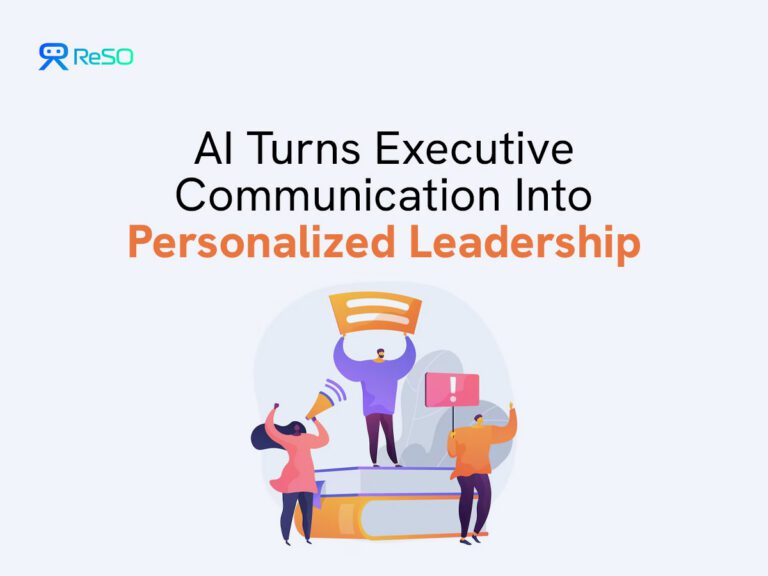




Let’s suppose you have a superpower that reads the room, no, the entire building, and instantly knows what each person wants to hear. That’s exactly what today’s AI tools can do for executives crafting messages for investors, customers, and partners.
How AI Is Supercharging Audience Segmentation
Modern AI analyzes mountains of data, from click patterns on your website and email open rates to social media sentiment and past meeting notes to spot distinct audience personas.
That means your next quarterly update can land in your investors’ inboxes sounding like a confident financial roadmap, while your customers get a friendly “here’s how we’re solving your pain points” note, and partners receive strategic roadmap insights tailored to joint-growth opportunities.
AI isn’t replacing your voice; it’s understanding which version of you speaks most effectively to each group.
Top AI Platforms That Know Your Stakeholders Better Than You Do
| Platform | Key Functionality | Why It Rocks |
| AffinityAI | Maps relationship networks; surfaces key contacts; suggests personalized outreach angles | Leverages CRM data, calendar history, and email patterns to craft spot-on pitch lines |
| PersonaPulse | Real-time sentiment analysis across channels | Alerts you when messaging drifts off-brand or stakeholder sentiment shifts |
| SegmentSmart | Predictive modeling to group audiences by goals rather than demographics | Differentiates investors focused on growth versus risk mitigation |
| ContentTailor | Adapts drafts automatically for tone and style | Generates audience-optimized first drafts, saving hours of rewriting |
Why Personalized Executive Content Wins Every Time
Think of your stakeholders as three VIP guests at a dinner party. You wouldn’t serve the same dish to everyone, and neither should you use the same message. Tailoring your words with AI is like crafting a bespoke menu that hits each guest’s sweet spot.
- For investors, it’s that satisfying main course: clear KPIs, risk mitigation plans, and growth projections. When you speak their language, “Here’s how we’re exceeding our targets and mitigating market shifts,” they lean in, fork at the ready, and often bring more to the table themselves.
- Customers want that warm, comforting side dish. They’re looking for “I see you” moments: real examples of how your product eases their daily grind. When they feel understood, loyalty lands on their doorstep faster than any flash sale.
- Partners? They’re the cocktail hour crowd, networkers who value alignment and opportunity. Serve them crisp insights on collaborative wins and future roadmaps, and you’ll toast to smoother deals and joint ventures.
AI lets you run those three perfect dinner courses simultaneously. Behind the scenes, it’s sorting data, parsing preferences, and fine-tuning tone so each note lands exactly where it should. The result isn’t just a louder megaphone; it’s three separate handshakes, eye contact included.
Such a level of personalization doesn’t just grab attention; it builds genuine trust, deepens engagement, and cements your reputation as a leader who truly gets your audience.
Building a Balanced Strategy That Combines Authentic Human Voice with AI Efficiency
You love the speed AI brings, but your stakeholders crave real, human connection. The secret sauce is blending the two so your messages feel both lightning-fast and genuinely “you.”
- First, capture your signature style. Whether you’re known for candid humor, bold optimism, or thoughtful reassurance, jot down a few go-to phrases and the rhythm of your speech. Think of this as your “voice DNA.”
- Next, feed that DNA into your AI tool. Upload a handful of your past emails, keynote snippets, or LinkedIn posts so the AI can learn not just your words, but your cadence and tone. Instead of cold automation, you get drafts that sound like your personal assistant who actually “gets” you.
- But don’t hit send just yet. Always run AI outputs through a human filter. Read it aloud. Ask: “Would I say this in a board meeting? Over coffee?” Tweak any phrasing that feels off, maybe swap formal “endeavor” for casual “jump in,” or swap “stakeholders” for “team.”
Finally, set guardrails to keep things real. Create a simple review checklist:
- Does this convey our core message?
- Is the tone on-brand and on-point?
- Are there any AI quirks that need human smoothing?
This three-step loop: train, tweak, trust, lets you scale your reach without losing your authentic voice. You get the best of both worlds: AI’s horsepower for personalization plus your unique leadership spark that truly connects.
Ethical Considerations and Maintaining Trust with AI-Generated Thought Leadership
If we are being real, using AI to craft your messages can feel like walking a tightrope. On one side, you’re amplifying your reach and precision. On the other hand? You’re juggling transparency, data ethics, and the age-old question: “Will people trust me if they know I used AI?”
The truth is that stakeholders aren’t just watching for authentic leadership anymore; they’re watching for responsible leadership.
The Trust Tax: What Happens When Ethics Slip
Skip the ethical guardrails, and you’re not just risking a compliance headache. You’re potentially torching years of relationship-building. Studies show that 75% of business leaders believe a lack of AI transparency could trigger customer churn. When investors, customers, or partners discover your AI-generated content misrepresented their data or preferences, trust doesn’t just crack; it shatters.
Consider algorithmic bias: if your AI personalizes messages based on outdated assumptions about investor priorities or customer behavior, you’re not just missing the mark; you’re potentially alienating entire groups. That’s not personalization; that’s prejudice in disguise.
Building Your Ethical AI Playbook
Start with radical transparency. When you use AI to enhance your communication, say so. A simple line like “This message was crafted with AI assistance to ensure it addresses your specific priorities” works wonders. It signals innovation, not deception.
Audit your data regularly. The information feeding your AI tools should be current, diverse, and representative of all your stakeholders. Create what experts call a “bias impact assessment”, essentially a health check for your AI’s decision-making process. Ask: Who’s included? Who’s missing? What assumptions are we making?
Keep humans in the driver’s seat. AI should amplify your voice, not replace your judgment. Set up cross-functional review teams that include diverse perspectives to catch blind spots before they become stakeholder headaches. Think of AI as your research assistant, not your ghostwriter.
The Transparency Advantage
Let’s talk about the counterintuitive part: being upfront about AI use often increases trust rather than diminishing it. When you explain how AI helps you better understand stakeholder needs and deliver more relevant insights, you’re positioning yourself as a forward-thinking leader who leverages technology responsibly.
The leaders who win in this AI-powered future won’t be the ones who hide their tools, they’ll be the ones who wield them transparently, ethically, and with genuine care for the people they serve.
The Executive AI Communication Dashboard – Your Command Center
Let’s consider one screen that shows investor confidence, customer curiosity, and partner enthusiasm, all live. That’s your AI dashboard, moving from “what happened” to “what’s next.”
Key Features
- Real-Time Sentiment Tracking: Spots shifts in confidence, curiosity, or concern across investors, customers, and partners.
- Engagement Forecasting: Predicts which topics, formats, and send times drive peak interaction.
- Automated A/B Testing: Continuously refines subject lines and messaging without manual effort.
- Cross-Channel Coordination: Keeps emails, social posts, and webinars aligned and on message.
Action Items for Real-World Implementation
| Timeframe | Action Item | Purpose |
| Next 30 Days | Stakeholder Audit | Map groups, preferences, and best channels |
| AI Tool Research | Shortlist platforms for content personalization | |
| Baseline Assessment | Benchmark current engagement metrics | |
| Voice Documentation | Capture leadership tone for AI alignment | |
| 30–90 Days | Pilot Program | Test AI personalization with one stakeholder segment |
| Content Template Development | Build AI-assisted templates for each stakeholder type | |
| Team Training | Train teams on ethical AI use and transparency best practices | |
| Feedback Systems | Set up real-time feedback loops to refine AI algorithms | |
| 90+ Days | Full-Scale Implementation | Roll out AI-driven thought leadership across all segments |
| Dashboard Integration | Launch centralized AI communication command center | |
| Continuous Optimization | Iterate based on analytics and stakeholder feedback | |
| Ethics Framework | Establish AI governance policies for responsible use | |
| Advanced | Predictive Communication | Anticipate needs with AI forecasting |
| Cross-Channel Coordination | Keep messaging cohesive across all platforms | |
| ROI Measurement | Define metrics to track AI engagement impact | |
| Industry Leadership | Share results and best practices to shape the market |
The future of executive communication is here, powered by AI, enriched by authentic leadership, and built on trust. Book a call today to unlock the full potential of AI-driven personalized communication and lead your industry with clarity and impact.