



Remember when all your website traffic reports used to start with: “Organic Search: Google, Bing, Yahoo”? Things aren’t that simple anymore. Now, your potential customers might be discovering you through AI assistants like ChatGPT, Perplexity, Gemini, or Copilot instead of a classic search engine.
This isn’t just a cool novelty; it’s a shift in how people ask questions, get answers, and decide which websites are worth visiting. And if you’re in marketing, SEO, or content strategy, understanding this new wave of AI-driven visitors might be what sets you ahead of the competition.
Key Findings of the Ahrefs Study
The Ahrefs analysis of nearly 82,000 websites between May and June 2025 reveals that AI-driven visitors behave quite differently from traditional search users.
- AI visitors view fewer pages (about 4 per session) but spend a bit longer on each, making their sessions longer but less deep.
- This behavior translates into higher bounce rates: AI-referred sessions bounce 4.1% more often than those from search engines and 5.4% more than the overall average.
Here’s where it gets fascinating! These bounce patterns actually tell two completely different stories about your AI visitors:
- One-and-done visits: Users find exactly what they need immediately and leave, signaling a clear, satisfied intent.
- Quick exits: When content or site experience doesn’t match expectations, AI users tend to bounce rapidly.
The payoff? AI search converts up to 23x better than organic search for users. Less volume, but way higher quality, these visitors actually buy. Plus, AI traffic often triggers.
Implications for Website and Content Strategy
So, what should you actually do with this information? AI visitors are playing by different rules, and your website needs to adapt. Here’s how:
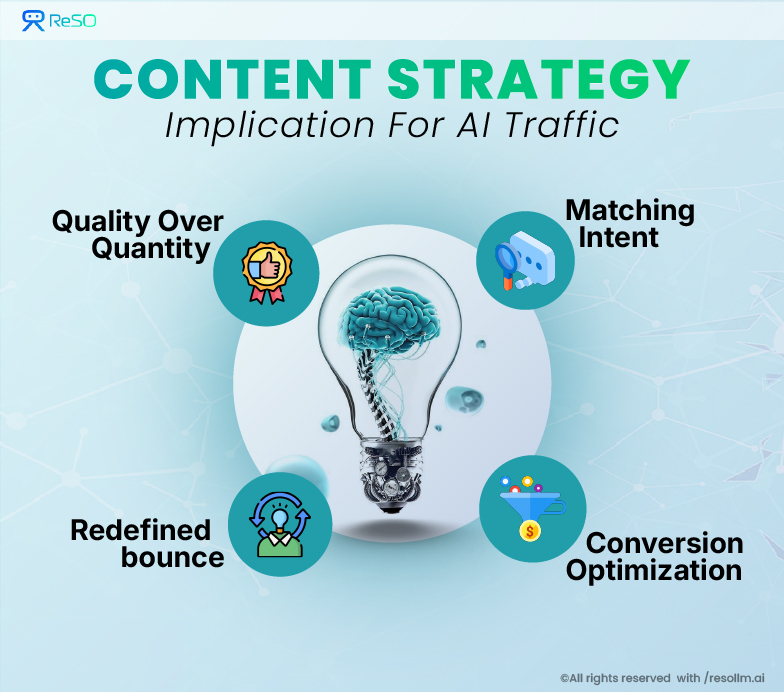
Matching Intent Instantly
AI users are impatient, in the best way. They’ve already told ChatGPT or Perplexity exactly what they need, so when they click through to your site, they expect to see it immediately. Your headline better matches their query, and your first paragraph should deliver the goods. No fluff, no “let me tell you a story first”, just straight answers.
Quality Over Quantity
AI users arrive with highly specific queries and clear intent. Rather than broadening content volume, focus on crafting targeted, in-depth articles or sections that directly answer common AI-driven questions.
Turn Browsers into Buyers
Although AI referrals may be fewer in number, they often have stronger purchase intent. Position clear calls to action (CTAs) and lead-capture forms prominently above the fold. A streamlined, distraction-free layout helps convert these decision-ready visitors more effectively.
Redefining Bounce Signals
Old-school bounce rates can be misleading; sometimes a quick exit just means someone got exactly what they needed. To tell “one-and-done” wins from real drop-offs, pair bounce rate with scroll depth and time-on-page.
The AI Traffic Mindset: Think Like Your Next Visitor
To truly win with AI-driven traffic, it helps to step inside the shoes of your AI referrals. These visitors are not browsing casually, they come with a laser focus, armed with answers from powerful AI assistants, ready to verify or act. Imagine your AI visitor as someone who’s already asked ChatGPT or Gemini, scanned summaries, and now landed on your page looking for that exact missing piece; the final confirmation or direct next step.
This means your website isn’t just a destination; it’s the closing chapter of their search story. Every millisecond of delay, every irrelevant sentence, or confusing navigation risks losing them to the next click. Your job? Speak their language instantly by anticipating their questions and delivering clear, concise answers with a smooth path to conversion.
Quick exercise: Think of your last AI-driven visitor and ask, What brought them here? What do they want to achieve? How fast can I get them there? Answer those well, and you’ll transform fleeting AI visits into lasting customer relationships.
Action Items: How to Capitalize on AI Traffic Trends
Refine Landing Pages for Direct Answers
- Structure every landing page to deliver instant solutions; your headline, summary, and most relevant keywords should appear near the top, giving users what they need within seconds.
- Insert a key takeaway box or FAQ section in the first screen view so readers can confirm their answer without hunting.
- Cut out any fluff or lengthy intros and let your content speak directly to intent.
- Design pages to be skimmable, with short paragraphs, lists, and bold terms drawing the eye.
- Update landing pages frequently to reflect changes in search queries or new conversational AI patterns.
Optimize for Conversational AI Platforms
- Audit your content for structured data, schema markup, and clear meta descriptions to encourage AI systems to highlight your pages.
- Include authoritative internal and external sources to boost credibility and AI citation chances.
- Ensure loading speed is top priority as AI referrals expect fast answers.
UX Upgrades for AI-Referred Visits
- Shorten user pathways to core actions: your CTAs, forms, product demos, or downloads should appear instantly above the fold and be easy to use.
- Reduce distracting navigation elements, excessive banners, or pop-ups that add friction for intent-heavy AI visitors.
- A/B test layouts for clarity and directness, decision-ready users should see their next step without scrolling.
- Focus on clarity and helpfulness rather than over-designed visuals.
Conversion Tracking & Attribution
- Treat AI traffic as a unique analytics stream, custom tags and segmentation will reveal hidden patterns and high-value sources.
- Choose analytics tools that allow you to track conversions tied specifically to conversational AI referrals.
- Monitor bounce rates, scroll depth, and time-on-page separately for these users to truly understand their behaviors.
Content Experimentation & Rapid Iteration
- Collecting user feedback via polls, heatmaps, and session recordings analyzing every aspect of their visit can guide faster iterations.
- Diagnose performance dips or spikes immediately after publishing changes and pivot your strategy when trends shift.
- Keep refreshing your top content and stay agile as AI search behavior evolves. Quick adaptation is key to capturing high-converting visitors.
- Iterate weekly rather than monthly for maximum responsiveness and impact.
Ever wondered why a handful of AI-driven clicks can out-earn thousands of traditional visits?
Conversational AI search is changing how people find and connect with brands online. As tools like ChatGPT and Gemini become more popular, AI referrals will soon be a main source of visitors with strong intent. Current analytics tools, like Search Console, still have trouble telling AI traffic apart from regular search traffic. So, businesses need to stay flexible by using other tools and custom setups to understand their AI traffic better.
Even though AI-driven visits might be fewer, they convert at higher rates than regular organic search traffic. These visitors usually come ready to make decisions and want quick answers, making their impact bigger than their numbers suggest. To stay ahead, marketers and site owners must improve tracking, adjust content for AI search behavior, and closely watch how these visitors perform. Those who act quickly by updating their tracking and content will get the most value from AI-driven visits. This creates a big chance for fast growth if you focus on these high-quality AI visitors. So, what are you waiting for? Book a call to explore AI-driven growth strategies.